


B6 hGLP-1R Mouse
Humanized model


Model characteristics
Type :
Humanized model
Strain name:
C57BL/6Smoc-Glp1rem2(hGLP1R)/SmocRj
Origin:
SMOC 2026
Colour and related genotype
Black mouse
Performance de reproduction :
 In vivo
Description of our model and application areas
The hGLP-1R mouse is a genetically engineered knock-in (KI) model, homozygous for the human Glucagon-Like Peptide-1 Receptor (hGLP-1R), developed to support translational research in diabetes, obesity, and metabolic disorders, particularly for therapeutic modalities specifically targeting the human receptor.
The model carries a humanized GLP-1R allele, in which the murine Glp1r coding sequence is replaced by or functionally substituted with the human GLP-1R gene, while preserving physiological expression patterns.
The GLP-1 receptor is a key regulator of glucose homeostasis, insulin secretion, appetite control, and energy balance. While murine and human GLP-1R share significant homology, species-specific differences exist in receptor sequence, ligand affinity, signaling dynamics, and pharmacological responsiveness, which can limit the predictive value of standard mouse models when evaluating human-specific GLP-1–based therapies.
To address this limitation, the hGLP-1R mouse has been engineered to express the human GLP-1R, allowing:
- Accurate assessment of human-specific agonists, antagonists, antibodies, and biologics (Figure 3 and 4)
- Improved translational relevance for PK/PD and efficacy studies
- Reduced risk of species-related false negatives during preclinical development
Key characteristics:
- Homozygous expression of human GLP-1R under endogenous regulatory control
- Preservation of tissue-specific expression (pancreatic β-cells, CNS, gut, peripheral tissues)
The model remains otherwise fully immunocompetent.

Our model
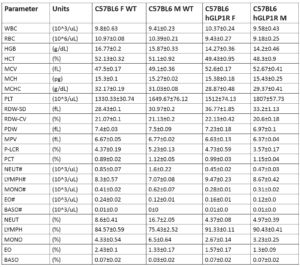
Table 1. Hematological parameters comparing C57BL6 wild-type mice to C57BL6 hGLP1R mice (Data are presented as mean and ± SEM).
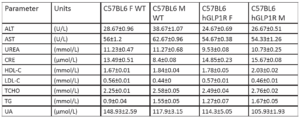
Table 2. Biochemical blood parameters comparing C57BL6 wild-type mice to C57BL6 hGLP1R mice (Data are presented as mean and ± SEM).
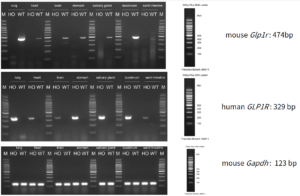
Fig 1. Detection of GLP1R and Gapdh expression in lung, heart, brain, stomach, salivary gland, duodenum and samll intestine by RT-PCR.
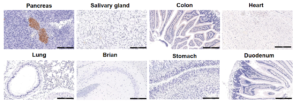
Fig 2.Detection of human GLP-1R expression in hGLP-1R mice by IHC. Pancreas, salivary gland, colon, heart, lung, brian, stomach and duodenum were collected from homozygous hGLP-1R mice (HO/HO), and analyzed by IHC with anti-human GLP-1R antibody. Human GLP-1R is specifically expressed in islets of the pancreas.
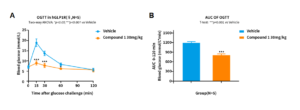
Fig 3.Validation of the hypoglycemic efficacy of the test compound in humanized GLP-1R mice.The oral glucose tolerance test (OGTT) was performed (n=5), and the test compound showed a better hypoglycemic efficacy (p<0.001). The above data indicated that the GLP-1R humanized mouse is an effective model for diabetes drug screening.
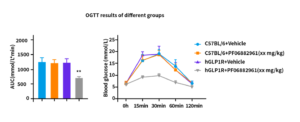
Fig 4. Efficacy study of PF06882961 in hGLP1R mice. PF06882961 has shown significant effect in hGLP1R mice in OGTT study, but no effect in C57BL/6 mice.
Voir tous les modèles de recherche
〉